
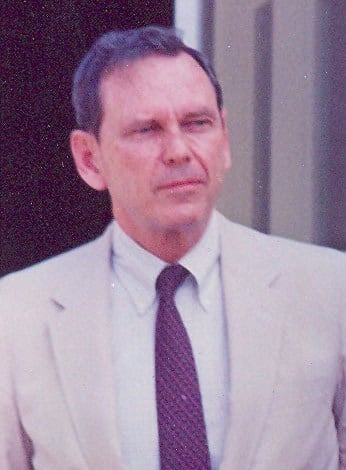

Dick Murphy Celebration of Life Remarks
By Bill Burns – March 1, 2025
“Dick Murphy’s humanity shone through in NEA, and in each of the embassies he led. He knew that taking care of your people was as important to success in American diplomacy as artful negotiations, and he created an atmosphere in which every officer was treated with dignity and respect, encouraged to perform to their maximum capability. He set high standards and expected high performance, but he was a kind and considerate man. As a young officer, I would do anything to avoid letting him down, and as I took on more senior jobs I always tried to model his decency and integrity — his humanity.”
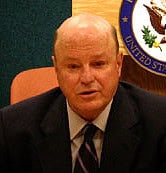
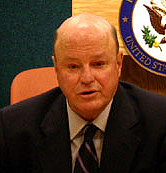
MY FOREIGN SERVICE ROLE MODEL- AMBASSADOR FRANK WISNER
by Kenneth M Quinn
“Frank was my image of what a Foreign Service Officer should be: highly intelligent; sophisticated; extremely well educated; personally engaging; fascinated by and endlessly curious about the country and the people; genuinely interested in the individuals who worked for him; and, most importantly for me, prepared to judge you solely based on the quality of your work.”
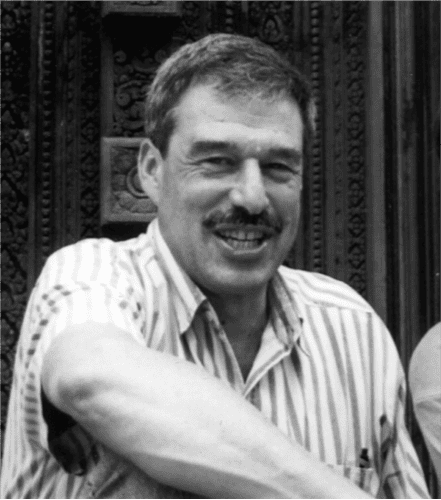
Thinking about Lionel Rosenblatt
by Kenneth M Quinn
In reflecting about the lifelong impact of my dear friend Lionel Rosenblatt, who passed away on April 11, I invariably come back to thinking of him as one of those young civilian advisors who were so ubiquitous across the countryside during the Vietnam war as part of what was known as CORDS – -Civil Operations and Revolutionary Development Support.
CORDS was the short-lived civilian component of the Military Assistance Command Vietnam (MACV) advisory program that existed for only a decade, ending when the U.S. military withdrew in 1973, but which had an impact that lasted for a generation, as Lionel’s life exemplified.
In CORDS, there was this sense of being out on your own, driving down the road in your International Harvester Scout, the windows rolled down and the wind in your face. You were out in the villages, speaking Vietnamese, penetrating the cultural veil to try to understand the society while endeavoring to bring about positive change through agricultural development. To be young in Vietnam as a civilian field advisor, was the experience of a lifetime; and as Lionel Rosenblatt demonstrated, with an impact that lasted a lifetime.
Many of those first tour provincial “field advisors” were USAID officers, a number were former Peace Corps Volunteers or military veterans, and some, like Lionel and me, were FSOs from the State Department. Mostly in their 20s or early 30s, they had been trained in the language and therefore often had more access and insights into Vietnamese society, and particularly the suffering of war victims and refugees. When you wanted to know what was going on in a particular province, those young Foreign Service officers were the individuals you sought out and with whom you spoke. I felt a special bond with all of them, and no one more so than Lionel.
What united all of us was this sense of a shared adventure in this sometimes tragic and endlessly fascinating country, with a deep and intriguing history, an engaging culture and a language difficult to master. It wasn’t about what agency or department you came from. What mattered was how well you spoke the language, what you knew about the situation, and always “telling it like it is,” no matter what your superiors wanted to hear. That certainly described Lionel.
Another bond we shared and carried with us throughout our careers was a deeply felt commitment to do the right thing, especially when it came to alleviating suffering. And as I saw time and time again, no one exemplified that trait more than Lionel – – whether it was his: heroic role during the evacuation of Saigon; blowing off Chinese language training in oder to collaborate with Ambassador Richard Holbrooke to rescue the Vietnamese “Boat People refugees; assisting Cambodian genocide victims by removing land mines; or prominently adding his name to our Group of 46 mid-career officers protest to the Secretary of State about the declining commitment to excellence in the State Department.
I recall Lionel’s introspection during our long discussions both in Washington and while we were traveling with his wife Ann in Switzerland around UNHCR meetings in Geneva, as he pondered whether the State Department was too confining and he should leave to follow his heart. As I said to Lionel, of all the people I knew, he was the one person whose humanitarian passion could possibly lead him to be considered for the Nobel Peace Prize. He went on to found Refugees International.
Lionel Rosenblatt was at the forefront of that idealistic Vietnam cohort of Foreign Service officers that, inspired by President John F. Kennedy, truly changed the DNA of the State Department and USAID. He will be missed, but his legacy will live on.
—————————————————————
Ken Quinn served in Vietnam for five and one-half years between 1968 and 1974, followed by two plus years on the National Security Council at the White House. He was U.S. ambassador to Cambodia from 1996 to 1999.