
Preserving America’s Ideals In Vietnam and Laos
Morton Dworken grew up on the outskirts of Cleveland, Ohio, joined the Foreign Service in 1968, and immediately began preparing for an assignment to Vietnam. After helping local officials counter the Viet Cong’s influence with security and development projects in Phuoc Long, Dworken transferred to Laos where he ensured that American forces complied with the U.S. Government’s targeting rules.
As a member of the Provincial Advisory Team in Phuoc Long, a region with a substantial Viet Cong presence, Dworken supported local officials in improving security, creating economic opportunities, upgrading infrastructure, modernizing agricultural practices, and assisting refugee populations. “That whole range of development activity was performed with the idea of not doing it ourselves,” recalls Dworken, “but encouraging, guiding and supporting the Vietnamese government officials into doing it themselves.” This work was instrumental in preserving local stability during the war and providing humanitarian aid to communities in need.
His duties, however, changed dramatically when he arrived in Vientiane, Laos, in 1971. As the American Ambassador’s Special Assistant for Political-Military Affairs, known colloquially as the “bombing officer,” Dworken was responsible for monitoring U.S. Air Force bombing runs in Laos to ensure compliance with the Rules of Engagement (ROE) — the instructions from the U.S. President and American military leaders on what could be targeted and what weapons could be employed. The goal was to prevent military operations from undermining U.S. political goals or violating international law. “We made a significant effort,” Dworken remembers, “to protect civilians, supporters of the [Laotian] government, suspected [Prisoner of War] camps, cultural sites, temples, villages, and hamlets.”
Dworken reviewed aerial surveillance photography before air strikes to identify civilian infrastructure and other off limits areas. “As the ‘bombing officer,’” Dworken notes, “I was obliged to act any time of the day or night when the USAF sought permission to perform airstrikes in Laos.” He used post-strike photos and the Air Force’s operational reports to confirm compliance with the ROE and prevent the misuse of restricted ammunition.
“We made a significant effort to protect civilians, supporters of the government, suspected POW camps, cultural sites, temples, villages, and hamlets.”
Morton Dworken
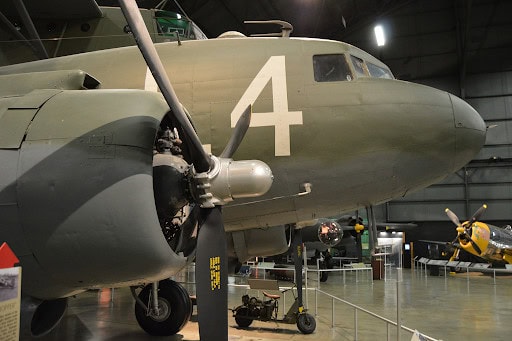
“Every aircraft that dropped any ordnance anywhere in Laos had to file an operational report,” he recalls. “We were told what kinds of bombs were dropped, the exact locations, the time, the reasons, and the results.” On occasion, Dworken used direct observation, monitoring strikes from a C-47 “Goony Bird,” as it flew beside USAF B-52 bombers.
In both his work promoting local development and stability in Vietnam and the life-and-death decisions he made as “bombing officer” in Laos, Dworken helped the United States live up to its highest ideals even in times of war. And while he acknowledges that the U.S.
war effort was ultimately unsuccessful in Southeast Asia, he helped ensure that we employed proportional and discriminate military force.