

Navigating an Attempted Coup in the Central African Republic
Brooklyn native Mosina Jordan graduated from NYU and earned her law degree before beginning work for the White House’s Community Services Administration. Jordan entered the foreign service in 1982 as a member of the U.S. Agency for International Development (USAID). In 1995, Jordan became the U.S. Ambassador to the Central African Republic, the first black woman appointed as ambassador from the ranks of USAID. She developed close ties with President Ange-Félix Patassé, the former French colony’s first democratically elected leader, and encouraged him to address grievances within the military and reduce rising political tensions. Before he could take corrective action, however, a military mutiny erupted.
When fighting broke out in the capital of Bangui, Ambassador Jordan rushed to the embassy. “The American officers and some critical local staff were all hunkered down in the embassy,” she recalls, “anxious about leaving their families at home alone.” Rebels outside, attempting to oust the current president, were establishing themselves as a brutal and ruthless force. “The rebels were burning French homes. They burned down the French Cultural Center twice. They looted the stores in the city and burned some of the stores. They looted the hotel and the World Bank director’s house.” Rebels took up positions on the embassy’s perimeter to shield themselves from government rockets, putting Jordan and her staff in the crossfire as fighting raged day and night.
“We had very little water and no food,” she recalls, but she still offered shelter to anyone fleeing the violence. “We gave refuge to Cameroonians, Lebanese, Chinese, and Russians, and a host of other nations because they had no place to go and the city was dangerously unsafe.”
While the embassy building sheltered them from the incessant machine gun fire, Jordan became concerned about those caught in hot spots around the city, including fourteen American Peace Corps Volunteers. It would take an armored vehicle to get them out. Fearing the worst, she contacted nearby French military forces and pleaded with them to rescue the trapped civilians. When they declined, Jordan asked the State Department to pressure Paris. Once the order came down from their government, a French detachment rescued the trapped volunteers.
“We had very little water and no food. We were also taking in refugees. Anyone caught out in the city’s hot zones came to our embassy for refuge”
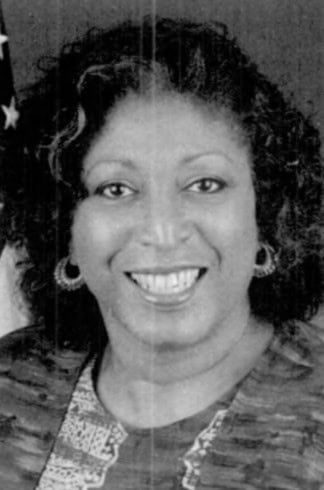
Ambassador Mosina Jordan
Soon, Jordan learned that President Patassé intended to bomb the rebels around the embassy. She immediately contacted Patassé, warning him that such brash actions would be a severe mistake. “If you’re intent on doing that, then you’re declaring war on the U.S.” she insisted. “If you take the rebels out, you take me and my staff out as well… You better think about that and call me back.” Jordan’s bold tactics persuaded the president to call off attacks near the embassy.
Two weeks into the conflict, the Commander-in-Chief of U.S. European Command called Ambassador Jordan and asked what resources she needed. Jordan was blunt. “I said, ‘General, I don’t know what the hell I need. Send it all.’” Within 18 hours, U.S. Marines deployed to the embassy and established a foothold, bringing vital relief to besieged embassy staff.
Ambassador Jordan then organized the evacuation of non-essential embassy personnel, remaining Peace Corps Volunteers, and American missionaries and business people. Jordan stayed in Bangui through two more coup attempts to continue representing U.S. interests. The fighting eventually forced her to also leave, but not before she had ensured the safety of every American citizen in the country.