Administration transitions, during which power over the federal executive branch is transferred from the sitting president to the president-elect, can be stressful for federal personnel. During the weeks between Election Day and inauguration day, there can be changes in policy, staff and budgets, and the new administration needs to learn about the work of the… Read More "Warming to the New Administration at the State Department, 1980-1981"
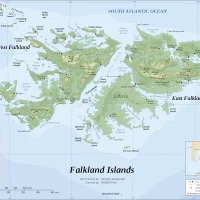
In 1982 a long-simmering dispute between the United Kingdom and Argentina over a small group of islands – the Falklands for the British, the Malvinas for the Argentinians – erupted into war. The disagreement arose from a dispute that goes back to the 1700’s when France, Spain, and Britain all tried to claim and settle the… Read More "Looking at the War in the Falklands/Malvinas from Both Sides Now"
Between Iraq and a Hard Place: Declared Persona Non Grata by Saddam
Iraq expelled an American diplomat stationed in Baghdad on November 17, 1988 for having contacts with Iraq’s Kurdish minority. Haywood Rankin, head of the American Embassy’s political section, was forced to leave the country after he and a British diplomat returned to Baghdad from a trip to Kurdistan that had been approved by Iraqi authorities.… Read More "Between Iraq and a Hard Place: Declared Persona Non Grata by Saddam"
Mission Unspeakable: When North Koreans Tried to Kill the President of South Korea
On October 9, 1983, while South Korean President Chun Doo-Hwan was on a visit to Rangoon, Burma to lay a wreath at the Martyr’s Mausoleum of Swedagon Pagoda, a bomb concealed in the roof exploded, killing 21 people including four senior South Korean officials. President Chun was spared because his car had been delayed in… Read More "Mission Unspeakable: When North Koreans Tried to Kill the President of South Korea"
Crisis Management: Occupation of USIS in South Korea, 1985
On May 25, 1985, seventy-three South Korean students barged into the United States Information Services (USIS) library in Seoul and began a three-day occupation. The students’ primary demand was an apology from the U.S. Ambassador, Richard L. “Dixie” Walker, as the representative of the American government, for the United States’ alleged role and complicity in… Read More "Crisis Management: Occupation of USIS in South Korea, 1985"
The 1991 Coup Against Mikhail Gorbachev
In August 1991, hard-line members of the Communist Party of the Soviet Union (CPSU) who opposed President Mikhail Gorbachev’s reforms and decentralization of government powers tried to overthrow him. The short-lived coup attempt is considered pivotal in the rise of Boris Yeltsin and the eventual breakup of the USSR. The attempt took place at a… Read More "The 1991 Coup Against Mikhail Gorbachev"
The Siberian Seven: Escaping Religious Persecution in the U.S.S.R.
From its inception, the Soviet Union became the first state in the world to actively attempt to eliminate religion from society. Religion was viewed by Soviet leadership as counter-intuitive to scientific reason and as a threat to the consolidation and exertion of state power. Correspondingly, under Soviet religious policy, tens of thousands of houses of worship… Read More "The Siberian Seven: Escaping Religious Persecution in the U.S.S.R."
Seeking a Peace Settlement with Shimon Peres, Hawk and Dove
The passing of Israeli statesman Shimon Peres on September 28, 2016 was deeply felt by U.S. diplomats who had worked with him through the decades. Former U.S. Ambassador to Israel Daniel Kurtzer wrote: “Some will criticize Peres for his early years as a security hawk, while others will be critical of his later years as… Read More "Seeking a Peace Settlement with Shimon Peres, Hawk and Dove"
“The Wild West” — Peshawar and the Afghan Mujahedeen
In the late 1970s, the USSR had been supporting the Afghan government in its fight against rebels, who had made considerable inroads and controlled territory outside Afghanistan’s major cities. Determined to squash a growing threat, the Soviet Union invaded Afghanistan on December 24, 1979. Soviet troops and swarms of helicopters overthrew the government, which Moscow believed had… Read More "“The Wild West” — Peshawar and the Afghan Mujahedeen"
Jesse Helms: The Senator Who Just Said No
Jesse Alexander Helms, a five-term Republican Senator (1973- 2003) from North Carolina, was known not only for his conservative beliefs but for the lengths he would go in support of them. A proponent of the conservative resurgence movement in the 1970s, Helms cherished his nickname: “Senator No,” granted for his obstructionist tendencies. As a member… Read More "Jesse Helms: The Senator Who Just Said No"