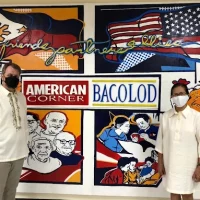
Many career paths have people who are driven by a singular focus to get promoted above all else, and the Foreign Service is no exception. This mindset can lead to understaffing in organizations that are not considered “career enhancing” or particularly known for leading to promotion. However, such organizations have benefits, such as providing job… Read More "The Bi-national Center and Upward Mobility Within the Foreign Service"

On April 25, 1974, the Movimento das Forças Armadas (MAF), composed of Portuguese civilians and military officers, successfully overthrew the fascist Estado Novo regime without firing a single shot. In this “Moment in U.S. Diplomatic History,” we see that Public Affairs Officer James D. Conley, who was stationed in Portugal three years prior, witnessed every… Read More "The Catalyst for Democracy—Portugal’s Carnation Revolution"

Artificial Intelligence (AI) is developing and advancing right before our very eyes. It has aggressively integrated into our society as it contributes heavily to a plethora of fields such as medical, legal, military, and government. Although AI is used universally as a resource and tool, it is less certain how advanced and dependable it will… Read More "A Diplomat’s Perspective on Artificial Intelligence (AI)"
Being fluent in different languages is a fundamental skill for foreign service. While many foreign service officers learn languages as they develop their careers, fewer start a foreign service career following their love for learning languages. This is the story of how Foreign Service Reserve Officer (Unlimited) John Ratliff III found a Japanese family that… Read More "Finding a Family Abroad—How a Japanese Family Started a Foreign Service Officer’s Career"

Colombia was in chaos when Andrés Pastrana was inaugurated as president of Colombia in 1998. Drug lords and the widespread production and sale of narcotics—especially the native grown coca—was at the height of national and international concern. Pastrana was faced with opposition and threats from the Revolutionary Armed Forces of Colombia (FARC) and other armed… Read More "How Recognizing the Early Alternative Development Failures in “Plan Colombia” Led to its Ultimate Success"

No symbol more iconically represents the United States abroad than its flag, the Star Spangled Banner. Whether planted on the surface of the moon, flown over U.S. embassies, or worn on military uniforms, the flag serves as a universal beacon of freedom and democracy. U.S. Foreign Service Officers who serve our country around the world… Read More "The Stars and Stripes Around the World"
From Taiwan to the Philippines to Bangladesh to Ghana , Frank Young’s career in the Foreign Service took him all over the globe. From his years as a student and researcher in India and Taiwan to his over three decades of service within the Foreign Service and the United States Agency for International Development (USAID)… Read More "Lessons in Understanding—Redeveloping the United State’s Comprehension of India"
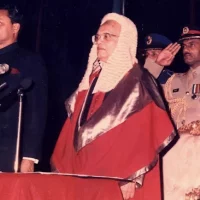
Most Americans know the Gulf War for the successful rout of Iraqi forces from Kuwait, but there’s an important side story to this history: a navy flotilla, while on its way back home after the ceasefire, helped save Bangladesh from collapse after the 1991 Bangladesh Cyclone. Dubbed “Operation Sea Angel,” eight thousand navy personnel and… Read More "Operation Sea Angel—How the Gulf War Saved Bangladesh"
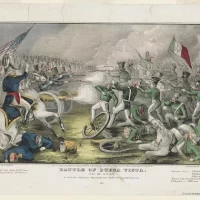
Here at the Association for Diplomatic Studies & Training, we recognize the importance of documenting and distributing oral records of U.S. diplomats—this recording of the past becomes a centerpiece in shaping our perceptions of the profession today. But how often do we come across a Foreign Service Officer (FSO) who places an equal effort on… Read More "Diplomacy in Mexico and Canada Inspires Remedying the Negligence of History"
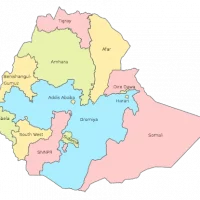
Cameron Bonner already had experience as a Peace Corps Volunteer in Ethiopia (1967–1969) when he chose to return to the country for a teaching position at Addis Ababa University. Yet Bonner encountered a difficult political and social environment when he arrived in late 1975. Violent civil and political unrest, coupled with recurring and widespread drought… Read More "“The Winds of Change were Growing”—Drought Preparation and Education Reform in Ethiopia Despite Civil War and Famine"