
C. Douglas Dillon was a politician and diplomat who served as U.S. Ambassador to France in the critical post World War II period, 1953-1957, and later as Under Secretary of State and Treasury Secretary. Son of a wealthy investment banker, Dillon graduated from Groton and Harvard, served in the U.S. Navy during World War II,… Read More "To be Young, Rich and Ambassador to Paris in the ’50s"
CNN, Tanks, and Glass Walls: The August 1991 Coup
In August of 1991, hard-liners opposed to Soviet President Mikhail Gorbachev initiated a coup attempt to overthrow him. The rebellion occurred in part because of financial strife as the Soviet Union transformed quickly from a statist to a market-based economy. Long lines formed for essential goods including medicine and fuel, and grocery shelves were empty.… Read More "CNN, Tanks, and Glass Walls: The August 1991 Coup"
The Rough Road to Moscow for Malcolm Toon
Malcolm Toon was a fluent Russian speaker and one of the State Department’s top experts on the Soviet Union during the Cold War. He was ambassador to Czechoslovakia, Yugoslavia, Israel, and the Soviet Union. Toon was characterized in The New York Times in 1978 as “one of the most influential of the postwar ambassadors in… Read More "The Rough Road to Moscow for Malcolm Toon "
When One of “The Murrow Boys” Became a Foreign Service Wife
Mary Marvin Breckinridge Patterson was the only female member of the original generation of CBS Radio war correspondents known as “The Murrow Boys.” A photojournalist and cinematographer, she studied French, German, Italian, and modern history at Vassar College. While there, she also helped found the National Student Federation of America, and in that way met…
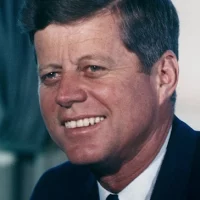
After Fidel Castro ousted Cuban strongman Fulgencio Batista, expropriated American economic assets and developed links with the Soviet Union, President Eisenhower authorized the CIA in March 1960 to develop a plan to overthrow Castro. The agency trained and armed Cuban exiles to carry out the attack. Shortly after his inauguration, John F. Kennedy learned of the invasion plan, concluded… Read More "New President, Bad Plan: the Bay of Pigs Fiasco"
A Man for all Transitions: Thomas Reeve Pickering
Considered by many the most accomplished diplomat of his generation, Thomas Reeve Pickering served as U.S. Ambassador to Jordan, Nigeria, El Salvador, Israel, India, and Russia. While serving as the U.S. Permanent Representative to the United Nations The New York Times described him as “arguably the best-ever U.S. representative to that body.” He was Assistant…
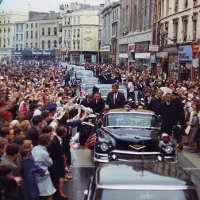
Relations between the U.S. and Ireland have traditionally been strong, thanks to common ancestral ties, history and shared values. Irish citizens immigrated to the thirteen Colonies, fought in the War of Independence and were among the first to drive cattle westward. Prompted largely by the Great Irish Famine, from 1820 to 1860 two million Irish… Read More "Ireland and the U.S.: The Best of Friends, Except When They Weren’t"

In 1982 a long-simmering dispute between the United Kingdom and Argentina over a small group of islands – the Falklands for the British, the Malvinas for the Argentinians – erupted into war. The disagreement arose from a dispute that goes back to the 1700’s when France, Spain, and Britain all tried to claim and settle the… Read More "Looking at the War in the Falklands/Malvinas from Both Sides Now"
Soft Power in a Cold War: Challenges of Reaching out to the Soviets
The “Iron Curtain” was a term used to denote the efforts of the Union of Soviet Socialist Republics to block its citizens from contact with the West. It persisted from the end of World War II until the end of the Cold War. Throughout those decades, the U.S. endeavored to breach the Curtain and reach… Read More "Soft Power in a Cold War: Challenges of Reaching out to the Soviets"
The 1991 Coup Against Mikhail Gorbachev
In August 1991, hard-line members of the Communist Party of the Soviet Union (CPSU) who opposed President Mikhail Gorbachev’s reforms and decentralization of government powers tried to overthrow him. The short-lived coup attempt is considered pivotal in the rise of Boris Yeltsin and the eventual breakup of the USSR. The attempt took place at a… Read More "The 1991 Coup Against Mikhail Gorbachev"