Nelson Mandela is justifiably revered, but not every act or speech by the Nobel Peace laureate was universally acclaimed. American…
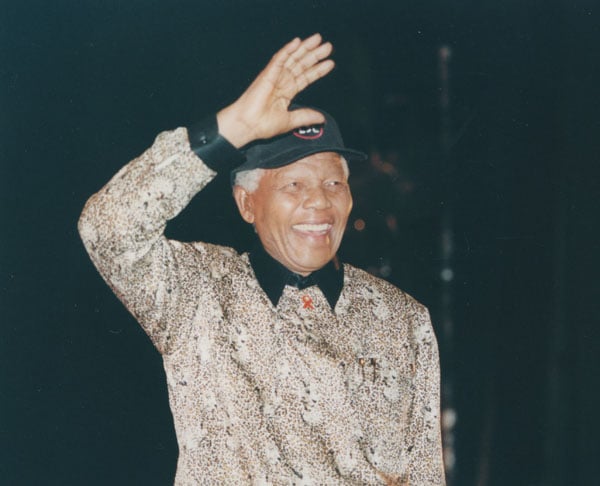

Nelson Mandela is justifiably revered, but not every act or speech by the Nobel Peace laureate was universally acclaimed. American…
Our Ambassador in Banjul, Gambia, was not expecting a coup on the morning of July 22, 1994 — but that…
Growing up in segregated Washington DC inspired John A. Burroughs to a life-long commitment to equal opportunity. He went on…
The famously contrasting bureaucratic cultures of the State Department and USAID made a sharp impression on Donald Bliss, USAID’s executive…
Arlene Render’s career took her from a segregated neighborhood in Cleveland, Ohio, to three ambassadorships and a lifetime of diplomatic…
John D. Negroponte joined the Foreign Service in 1960 and went on to serve as ambassador to Honduras, Mexico, the Philippines…
Russian Disinformation is Not New, Say Diplomats Who Implemented the Marshall Plan The obstacles the United States faced in implementing…
In the aftermath of the 1994 Rwandan genocide, ethnic Hutu refugees — including génocidaires — who had crossed into East Zaire to escape persecution from the new Tutsi government carried out attacks against ethnic Tutsis from both Zaire (now the Democratic Republic of the Congo) and Rwandan refugees. The Zairian government was unable to control the ethnic Hutu marauders, and indeed lent them some support as allies against the new, Tutsi-led Rwandan government. In response, the Tutsis in Zaire joined a revolutionary coalition headed by Laurent-Désiré Kabila. Kabila’s aim was to overthrow Zaire’s one-party authoritarian government run by Mobutu Sese Seko since 1965. With Kabila’s forces on the march, Zaire was soon engulfed in conflict. These hostilities, which took place from 1996-1997, are known as the “First Congo War” and lead to the creation of Zaire’s successor state The Democratic Republic of Congo. The United States, who had supported Mobutu until the end of the Cold War, recognized how potentially dangerous the situation was as Kabila gained control of most of the country and advanced rapidly towards the capital city of Kinshasa. In 1997, the United States sent a small group of diplomats to broker negotiations and attempt to come to a peaceful agreement between Mobutu and Kabila.
Harriet Elam-Thomas grew up in Boston, the youngest of five children. She graduated from Simmons College and later earned a…
Egypt and the Suez Canal became a point of global strategic interest during WWII because of the quick access the…