Service to Citizens Abroad
Protecting American Citizens is the first priority of all U.S. diplomatic missions. While embassies and consulates are there to replace lost passports and help Americans who are arrested or robbed during their travels, our diplomats also organize the evacuation of our citizens in times of crisis, including emerging conflicts, pandemics, and natural disasters. And when Americans fall victim to terrorist attacks or other crimes, diplomats can help ensure proper medical treatment and thorough investigations by local authorities.
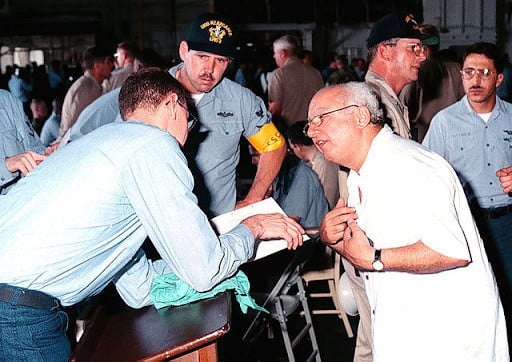
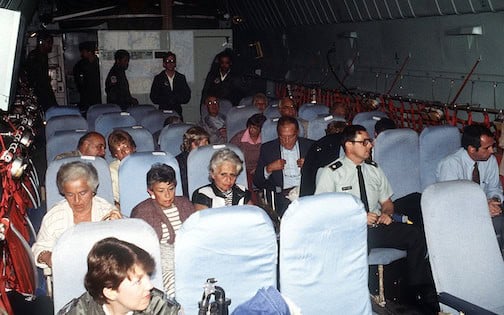
Photo on right: An evacuee from Freetown, Sierra Leone, is processed after arriving onboard the USS Kearsarge (LHD 3), on May 30, 1997, during Operation Noble Obelisk. Over 900 people from 40 different countries have been evacuated. – Defense.gov News Photo 970530-N-5572D-004.jpg
Assisting Americans in Distress
Tom Boyatt: Hijacking and Hostages in Syria: Thomas Boyatt, a native of Cincinnati, entered the Foreign Service in 1960 and served for 25 years. He held ambassadorships in Burkina Faso and Colombia. In August 1969, Boyatt was on a TWA flight stopping in Athens on its way to Tel Aviv when the plane was hijacked by the Popular Front for the Liberation of Palestine (PFLP) and re-routed to Syria.
Arlene Render: Evacuating Rwanda in the Midst of Genocide: The Foreign Service took Arlene Render from a segregated neighborhood in Cleveland to ambassadorships in the Gambia, Zambia, and Cote d’Ivoire. While working in the State Department’s Bureau of African Affairs in the mid-1990s, she worked to protect American civilians during the Rwandan genocide.
Edmond Hull: The Achille Lauro Hijacking: The Foreign Service took Edmund Hull far from his home in Carthage, Illinois, and put him in some harrowing situations, including being detained by militants during his first tour in Beirut in 1974. One of the most significant moments of his service, however, came while he was the political counselor in Cairo, Egypt, when he negotiated the evacuation and medical treatment of American citizens held hostage aboard the Italian cruise ship the Achille Lauro.
Ann Write: Evacuating Sierra Leone as Rebels Entered the Capital: Mary Annette “Ann” Wright was born in Oklahoma, grew up in Arkansas, and served in the U.S. Army before joining the Foreign Service in 1987. She was Deputy Chief of Mission in Sierra Leone in 1997 when fighting in the country’s civil war reached the capital of Freetown.
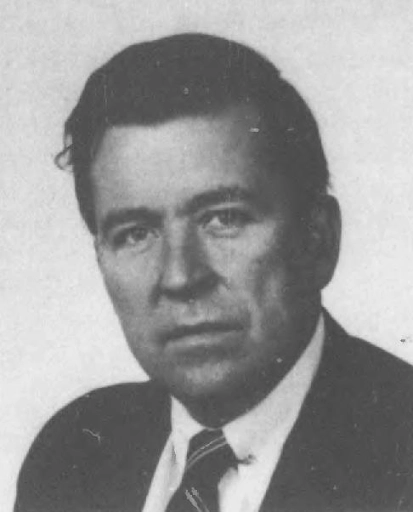
magazine.
Source: State 1985-02-Iss 275.
Public domain.
U.S. Department of Defense
Francis Terry McNamara: Escaping by Boat from Can Tho, Vietnam (coming soon)
Harrison Lewis: Rescuing Stephen Thuransky from a Hungarian Prison: Harrison Lewis was born in Amarillo, Texas and grew up in Los Angeles, California before joining the Foreign Service in 1930. Serving in Hungary shortly after World War II, Lewis was informed that Stephen J. Thuransky – a U.S. citizen – had been imprisoned for criticizing Hungary’s Communist government.
William Dyess: Rescuing Americans from East Berlin: William J. Dyess, a native of Troy, Alabama, and a University of Alabama graduate, joined the U.S. Foreign Service in 1958, eventually becoming America’s chief liaison to Soviet authorities in East Berlin in 1968.
Peter Tomsen: Saving American Families During the Fall of Saigon: After his childhood in Ohio and service in the Peace Corps in Nepal, Peter Tomsen joined the Foreign Service and played a pivotal role in the evacuation of Americans after the fall of Saigon in April 1975.
Mosina Jordan – Navigating an Attempted Coup in the Central African Republic: Brooklyn native Mosina Jordan graduated from NYU and earned her law degree before beginning work for the White House’s Community Services Administration. Jordan entered the foreign service in 1982 as a member of the U.S. Agency for International Development (USAID).