
The fall of the Soviet Union upset long-established power dynamics, leaving East and Central Europe, in particular, in uncharted waters. The creation of the Nordic-Baltic Eight (NB8), a regional cooperation consisting of Denmark, Estonia, Finland, Iceland, Latvia, Lithuania, Norway, and Sweden, helped the Baltics transition away from Cold War-style self-identification toward a more regionally-focused identity.…
You Know a Coup is Coming but No One will Listen: Sudan 1964
Sudan’s long history has been riddled with internal conflict. The United Kingdom and Egypt controlled Sudan for the first half of the twentieth century, then agreed to cede it self-government in 1953. In December 1955, the premier of Sudan declared unilateral independence. The newly independent Republic swiftly fell into a pattern of civil wars, coups… Read More "You Know a Coup is Coming but No One will Listen: Sudan 1964"
Foreign Service Newly-Weds in 1960s Yemen
Since the dissolution of the Ottoman Empire, Yemen was been a hot spot for unrest in the Middle East. The 1960s saw instability and hostile relations between the socialist South Yemen and the authoritarian Yemen Arab Republic (YAR), also known as North Yemen. The YAR was in the midst of a bloody civil war that… Read More "Foreign Service Newly-Weds in 1960s Yemen"
Guns, Oil and Education: Qatar’s Evolving Relationship with the U.S.
The State of Qatar declared independence from Great Britain on September 3, 1971 and the U.S. recognized it two days later, establishing diplomatic relations in March 1972. The American Embassy in Doha was launched the following year, and the first resident U.S. Ambassador to Qatar presented his credentials in August 1974. The relationship has developed… Read More "Guns, Oil and Education: Qatar’s Evolving Relationship with the U.S."
The Afghan Revolution of 1978: Invitation to Invasion
Afghanistan has had a long history of living under foreign rule. Once a protectorate of the British Empire, Afghanistan became fully independent in 1919, but its vulnerable monarchy led by King Zahir Shah was unable to unite the country’s many ancestral tribes into a central government. This set up the conditions for internal political instability. The monarchy… Read More " The Afghan Revolution of 1978: Invitation to Invasion"
The Lion King of Swaziland
King Sobhuza II was proclaimed King of Swaziland at the age of four months and would rule for 83 years, becoming the world’s longest-reigning monarch. His grandmother, with help from his uncle, acted as regent of Swaziland until his coronation in December 1921, when his name was changed to Ngwenyama, which means “The Lion.” Sobhuza’s… Read More "The Lion King of Swaziland"
A Day of Mixed Messages over Iraq’s Invasion of Kuwait
In 1991, the U.S. led a coalition of over 30 nations to force Iraqi troops out of Kuwait after Saddam Hussein ordered the invasion and annexation of the small oil-rich country. Although the invasion caught many throughout the world by surprise, those who had worked in the Middle East had been seeing tensions rise for… Read More "A Day of Mixed Messages over Iraq’s Invasion of Kuwait"
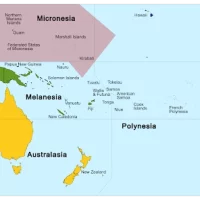
The Federated States of Micronesia (FSM), sometimes known simply as Micronesia, consists of four states — Yap, Chuuk, Pohnpei and Kosrae – spread across the Western Pacific Ocean. They are north of Australia, south of Guam, west of the Marshall Islands and almost 2,500 miles southwest of Hawaii. Together, the states comprise 607 islands spread across a distance of… Read More "Unexploded Ordnance, Spam and Moonshine–Life as Ambassador to Micronesia"
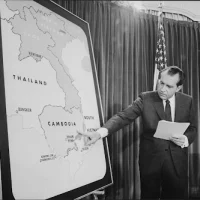
When President Richard Nixon took office in 1969, he and National Security Adviser Henry Kissinger vowed to find a way to end U.S. involvement in Viet Nam quickly and honorably without appearing to cave in to communist pressure. The U.S. launched a secret air campaign, thirteen major military operations, against North Vietnamese bases in Cambodia.… Read More "The U.S. Incursion into Cambodia"

On April 6, 1994, the presidents of Rwanda and Burundi were assassinated when their plane was shot down near Kigali airport and crashed into the grounds of the Rwandan presidential residence. The incident ignited genocide by the majority Hutus against Tutsis and against those supporting peace negotiations to bring Rwanda out of civil war. An… Read More "Fleeing Rwanda to Survive, then Returning to Rebuild, 1994"