The Transnistria region in Moldova is a Cold War relic. Along with Nagorno-Karabakh in Armenian-controlled Azerbaijan and South Ossetia in Georgia, it is a post-Soviet “frozen conflict” zone where a situation of “no war, no peace” still persists. It did not want to separate from the USSR when the latter was dissolved; the brief military conflict that started in March 1992… Read More "Transnistria — Moldovan Land Under Russian Control"
My Lai — Atrocity and Cover-up in the Midst of Vietnam
On March 16, 1968, in what was one of the most shocking incidents of the Vietnam War and in the history of the U.S. military, an estimated 500 Vietnamese villagers were killed by U.S. Army soldiers from Company C of the 1st Battalion, 20th Infantry Regiment, 11th Brigade of the 23rd (Americal) Infantry Division in… Read More "My Lai — Atrocity and Cover-up in the Midst of Vietnam"
Poland’s Path to NATO
The North Atlantic Treaty Organization was created by ten European countries, the U.S. and Canada in 1949 in the aftermath of World War II in order to provide mutual protection in case of an attack against any member. For decades it stood as the bulwark against a possible invasion from the Soviet Union and its allies.… Read More "Poland’s Path to NATO"
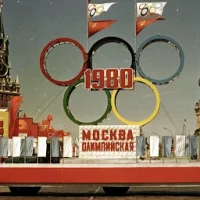
The Olympic Games, despite their lofty ideals, have since their inception in ancient Greece intertwined the best of athletic competition with the world of politics. Case in point: The 1980 Summer Games in Moscow, which took place less than a year after the USSR invaded Afghanistan. While there was no way to undo the invasion,… Read More "Moscow Gets Torched — The Boycott of the 1980 Summer Games"
The Final Days of Paraguaya’s Alfredo Stroessner
On February 3rd, 1989 tanks rolled into Paraguay’s capital Asuncion, led by General Andres Rodriguez. Briefly bullets and bombs rattled the city, and — after 33 years in power — President Alfredo Stroessner was quickly overthrown. Stroessner fled to Brazil, where he stayed until his death in August 16, 2006. In these excerpts, James F.… Read More "The Final Days of Paraguaya’s Alfredo Stroessner"
“Our government has evidenced moral bankruptcy”: The Blood Telegram and the 1971 Bengali Genocide
Pakistan after independence was a strange creation: the capital, Islamabad, and most of the power were located in the west while the rest of the country was located far out east, separated by another – and often hostile – country. The Bengalis were poorly treated and scorned by the Pakistanis; in March 1971, the nationalist… Read More "“Our government has evidenced moral bankruptcy”: The Blood Telegram and the 1971 Bengali Genocide"
Evacuating Somalia
Codename: Operation Eastern Exit. In January 1991, violence due to the Somali Civil War had escalated so much that Ambassador James K. Bishop requested military assistance in an evacuation of the U.S. Embassy in Mogadishu. This evacuation had more than its share of unexpected challenges, in no small part because the Pentagon was totally focused… Read More "Evacuating Somalia"
Stranded in the Cold War Siberian Winter
The Intermediate-Range Nuclear Forces Treaty (INF) marked a turning point in relations between the U.S. and the USSR. Signed in December 1987 by President Ronald Reagan and Mikhail Gorbachev, the treaty came into force on June 1, 1988 and was the first treaty to ever destroy nuclear missiles, rather than just cap the number each side could possess. It eliminated intermediate range missiles… Read More "Stranded in the Cold War Siberian Winter"
The Dramatic Hostage Crisis and Daring Rescue at the Japanese Embassy in Peru
It sounds like something out of a novel: a group of rebels, helped by an American, seize an embassy in a South American country and hold dozens of people hostage for more than four months. Indeed, the Japanese Embassy hostage crisis inspired the 2001 best-selling novel Bel Canto by Ann Patchett, winner of the PEN/Faulkner… Read More "The Dramatic Hostage Crisis and Daring Rescue at the Japanese Embassy in Peru"
The Civil War in China, Part I – The Bureaucratic Fight in Washington
Oftentimes the greatest foreign policy struggles are not with the host government but rather with the government bureaucracy back home. Such was the case with China in the 1940’s in a fight that would define geopolitics for a generation and would ultimately ruin the careers of those diplomats who were on the losing side. After… Read More "The Civil War in China, Part I – The Bureaucratic Fight in Washington"